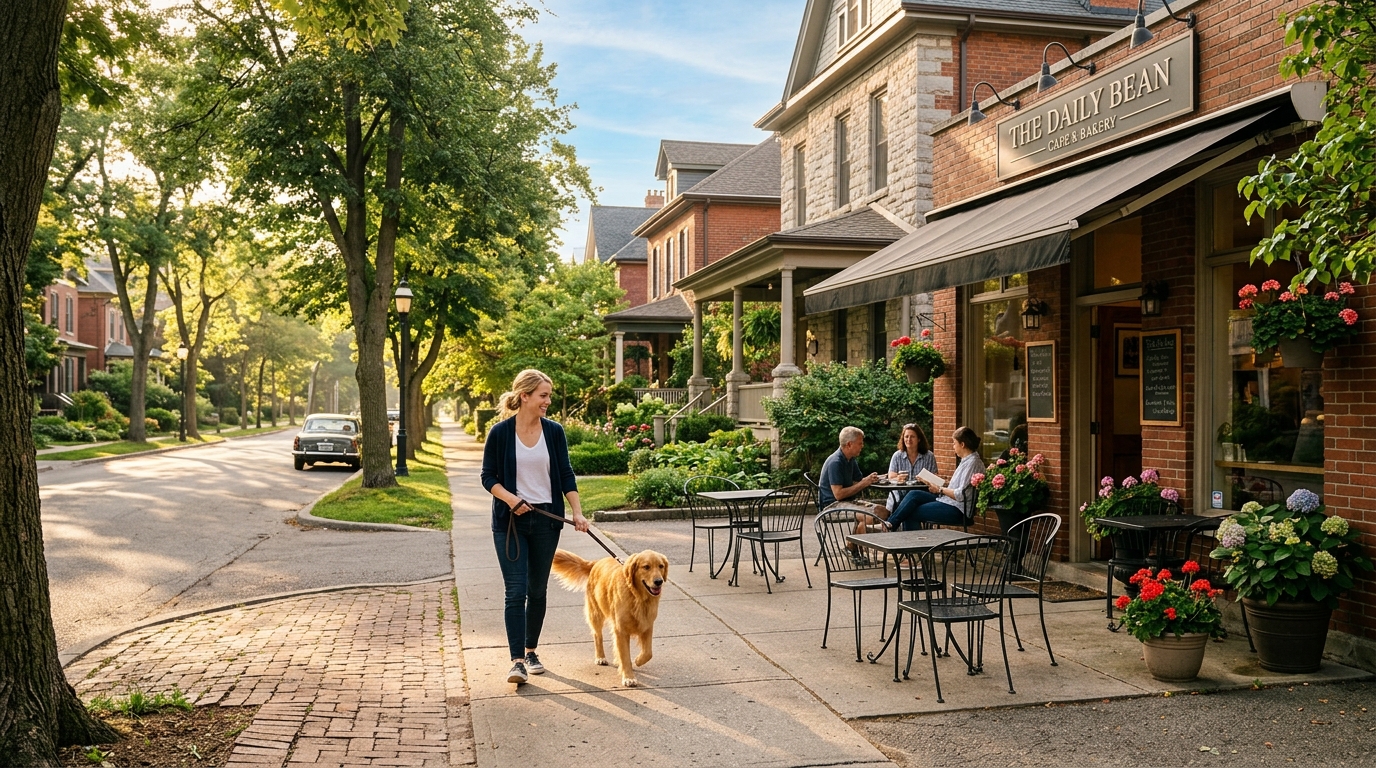
When you stand in the foyer of a home that you might eventually call your own, the temptation is to look at the crown molding or the condition of the hardwood floors. You check the water pressure in the primary bath and you squint at the wiring in the basement. Yet, the most important feature of any property cannot be found within its four walls. It is found in the way the sunlight hits the pavement three blocks away at eight on a Saturday morning.
The true value of a home is often measured by the quality of the stillness that surrounds it. In neighborhoods that have achieved a certain kind of communal grace, the weekend does not begin with a roar of traffic or the frantic pace of an urban center. Instead, it begins with the soft, metallic clatter of a local bakery unlocking its front door. It is the sound of a neighbor sweeping the sidewalk in front of a bookstore, the scent of espresso beans being ground at the corner cafe, and the sight of a golden retriever waiting patiently by a park gate.
The proximity to these small, human-scale touchpoints is the real estate metric that matters most. When a home is situated within a short walk of a library, a small grocer, or a public garden, the property ceases to be a static asset. It becomes a launchpad for a life lived in public, among people who eventually shift from being strangers to being familiar faces. This is the texture of a neighborhood, and it is what keeps a community vibrant long after the initial excitement of a home purchase fades.
Consider the walkability of a street not as a convenience, but as a mechanism for connection. A home that requires a car for every errand is a home that isolates its inhabitants. Conversely, a house that allows for a spontaneous walk to buy a newspaper or a loaf of sourdough bread encourages an engagement with the world. You learn the rhythm of the mail carrier, you notice when the seasonal flowers are planted in the public beds, and you develop a proprietary sense of care for the local trees. This is how you stop being a transient resident and start being a steward of a specific place.
Look for the signs of civic health when scouting your next location. Are the local schools integrated into the fabric of the neighborhood, with children playing in the yards after the final bell rings? Is there a community bulletin board that features more than just lost pet flyers, perhaps advertising a local gardening club or a neighborhood book exchange? These are the indicators of a place where people intend to stay for a generation. A home in such an area is insulated against the volatility of the market because it is anchored by the deep, consistent demand of people who love where they live.
The Sunday markets and the coffee shops are merely the surface of this lifestyle. The deeper reality is the sense of belonging that comes from knowing the layout of your surroundings by heart. It is the ability to navigate your world without a map, knowing exactly which side of the street offers the most shade during a summer walk and which corner provides the best view of the sunset. This is the luxury of a well-chosen location.
When you buy a home, you are buying a seat at the table of a neighborhood. You are opting into a shared experience of local schools, local parks, and local businesses that have been cultivated by the people before you. Choose a property where the surroundings nourish your curiosity. Look for the neighborhood that invites you to leave your front door open, to walk to the end of the block for a conversation, and to feel the quiet confidence that comes from living in a place that feels, in every sense, like a home.