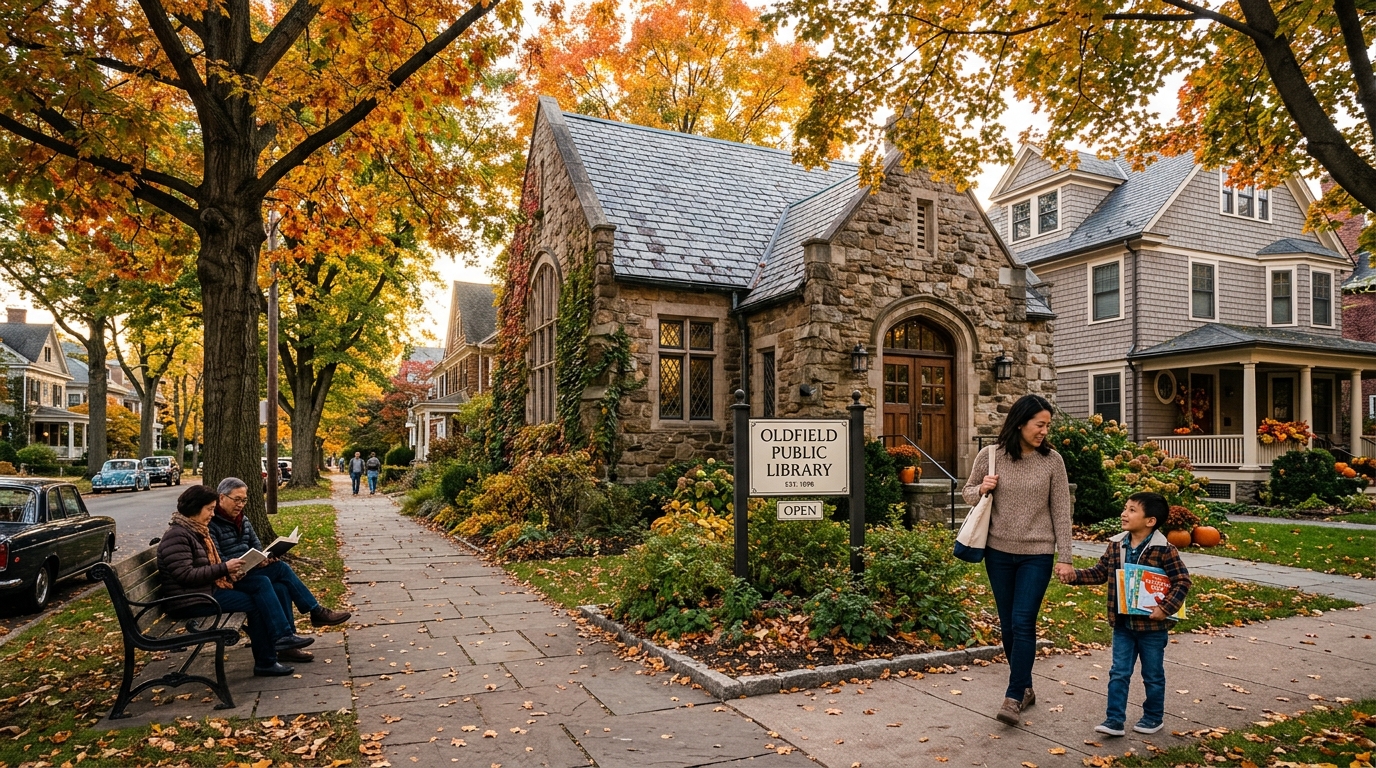
In the modern search for a home, we often talk about the proximity to transit or the quality of the local grocery store. We look for the short commute and the perfect espresso. Yet, there is a quieter, more profound anchor that defines the character of a neighborhood: the public library. To live within a few blocks of a library is to inhabit a specific kind of ecosystem. It is a place where the pace of life slows down, where the sidewalk traffic consists of people carrying stacks of stories, and where the architecture of the street often reflects a long-term commitment to the public good. The presence of a library acts as a civic compass, signaling that a community values its history, its children, and its shared intellectual life.
When we walk through a neighborhood anchored by a library, we notice a different rhythm. On Saturday mornings, the sidewalks are populated by a cross-section of the population that rarely converges so gracefully elsewhere. You see the retiree walking a golden retriever, the young parent pushing a stroller toward the weekly story hour, and the student seeking a quiet corner for deep focus. This is the ultimate third place, a term sociologists use to describe locations that are neither home nor work, but essential to the social fabric. Unlike a coffee shop or a boutique gym, the library requires no membership fee and no purchase. It is a rare, democratic sanctuary that offers a sense of belonging to anyone who crosses its threshold.
For the prospective homebuyer, living within the library radius offers more than just convenient access to books. It offers a level of neighborhood stability that is difficult to quantify but easy to feel. Libraries are permanent institutions: they are not subject to the whims of retail trends or the rise and fall of fashion. When a city invests in a beautiful, well-maintained library, it is making a promise to the residents that the neighborhood matters. This investment often ripples outward, manifesting in well-tended gardens, safer crosswalks, and a general sense of pride that homeowners take in their surroundings. You aren’t just buying a house: you are buying into a collective commitment to the neighborhood’s future.
Consider the local businesses that flourish in the shadow of a library. There is almost always a small bakery or a quiet cafe nearby where the post-library crowd gathers to flip through their new finds. These shops become the secondary hubs of the community, where neighbors recognize one another and the staff knows your order. This creates a walkable lifestyle that feels intentional and grounded. In these pockets of the city, the walkability score is not just a number on a screen: it is a lived experience of greeting neighbors and participating in a shared local economy. The library serves as the heartbeat that keeps these small-scale connections alive.
The quality of local schools is often mirrored in the vitality of the local library branch. A robust children’s section and a calendar full of teen programming are indicators of a neighborhood that prioritizes the next generation. For families, the library becomes an extension of the home, a place where children learn to navigate their world with independence. It provides a safe, supervised environment where the concept of the village truly comes to life. When you choose a home near a library, you are choosing a environment where education and curiosity are part of the daily landscape.
Ultimately, the choice of where to live is a choice of how to live. While a renovated kitchen or an open floor plan may provide immediate satisfaction, the long-term joy of a home comes from its connection to the world outside. The library district represents a choice for stability, literacy, and community. It is a place where the air feels a little more thoughtful and the streets feel a little more connected. As you look at potential properties, take a moment to find the nearest branch. Walk the path from the front door to the library steps. If that walk feels like coming home, you have likely found much more than a piece of real estate: you have found a place to truly live.