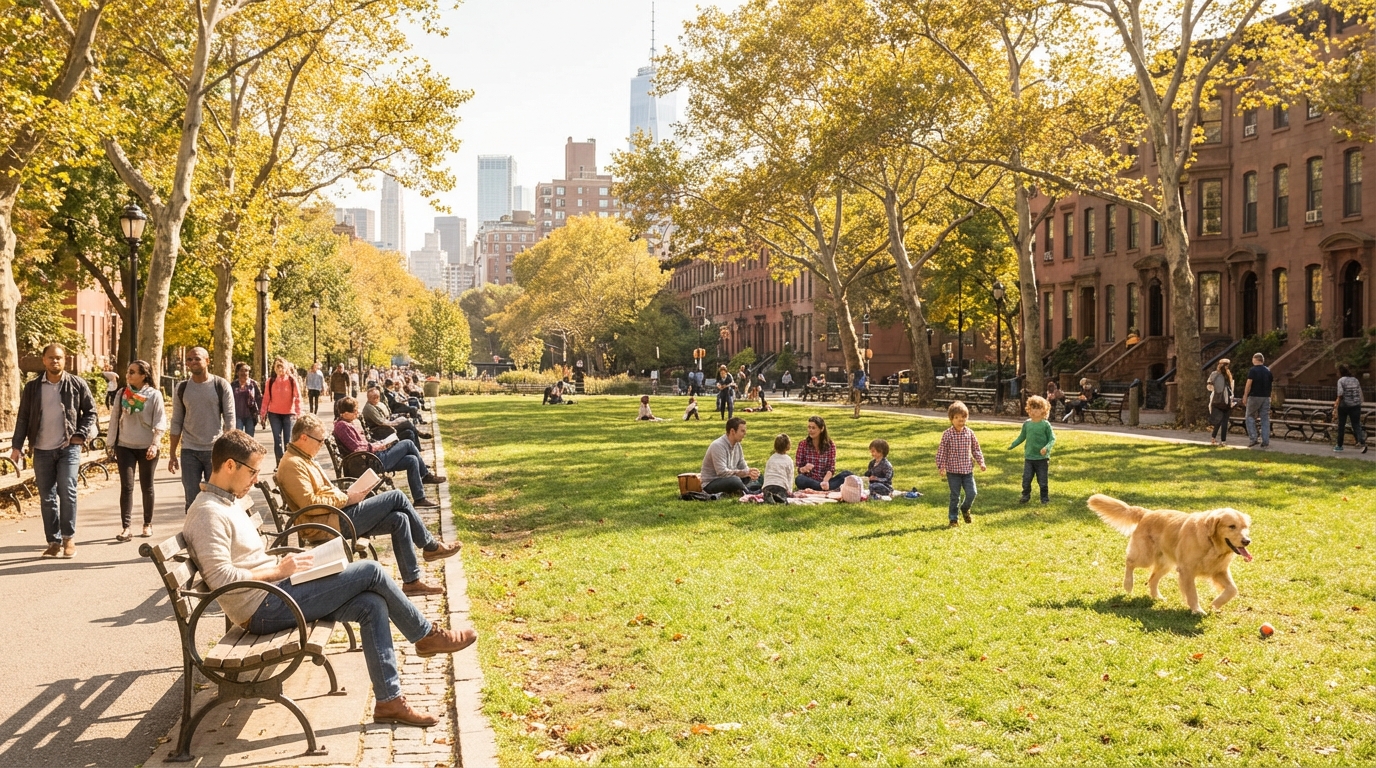
When we begin the search for a new place to call home, our internal checklists are often dominated by utilitarian concerns. We obsess over the layout of the primary suite, the efficiency of the HVAC system, and the specific orientation of the windows to catch the morning light. While these interior details matter, they represent only half of the equation for a life well-lived. A house is a container, but the neighborhood is the vessel that holds your daily existence. To truly thrive, one must look beyond the front door and consider the landscape of the public living room.
The concept of the third space, or the place that is neither work nor home, is the invisible architecture of a happy life. When you evaluate a potential street, look for the markers of a community that breathes. Are there benches where residents linger? Is there a local coffee shop where the staff knows the regulars by name? These are not mere amenities. They are the friction points of social life where the rigidity of your private schedule softens into the spontaneity of a shared morning. Your quality of life is tethered to the accessibility of these communal nodes.
Consider the rhythm of a Sunday morning. In a well-integrated neighborhood, the weekend begins at the farmer market. This is where the abstract concept of community becomes tangible. You see the soil on the carrots, you hear the music of a local busker, and you encounter the same faces you passed on the sidewalk earlier in the week. This repetition builds a sense of belonging that no architectural feature can replicate. When you live within walking distance of such a market, your home expands. Your kitchen counter becomes a place where you prepare goods that have a history, and your dining table becomes a staging ground for the stories you collected during your walk.
Walkability is often discussed in terms of fitness or convenience, but its true value is psychological. A neighborhood that encourages walking is one that prioritizes human scale over automotive efficiency. Wide sidewalks, tree-lined boulevards, and local shops clustered within a few blocks create a sensory experience that grounds you. You notice the changing colors of the leaves, the subtle shift in the light as the season turns, and the way the neighborhood sounds when the school day ends. Living in a walkable area allows you to participate in the life of your surroundings rather than merely transiting through them.
Schools, too, are central to the character of a neighborhood, regardless of whether you have children. A school is the heartbeat of a community. It dictates the traffic patterns, the local events, and the overall investment in the future of the area. When a community rallies around its local school, you feel a sense of stability and collective pride. You see it in the hand-painted signs during sports seasons and the way parents congregate on the sidewalk during dismissal. This energy spills over into the surrounding streets, fostering a culture of safety and mutual care that benefits every resident.
As you tour properties, resist the urge to keep your eyes locked on the floor plan. Spend time sitting in your car or on a curb with the windows down. Listen to the hum of the block. Does the neighborhood have a rhythm that matches your own? Do you see people tending to their gardens or chatting over fences? These are the indicators of a place where people intend to stay. You are not just buying a structure of wood and stone. You are buying a seat at the table of a local culture. The best investment you can make is in a place that encourages you to step outside, engage with your neighbors, and become a part of the local tapestry. In the end, a home is only as good as the life it allows you to lead in the streets just beyond your threshold.