The sound of a whistle blowing across a dew-heavy field on a Saturday morning is more than a signal for a youth soccer match to begin. It is a rhythmic pulse that defines the boundaries of a community. While real estate listings often prioritize the number of bathrooms or the vintage of the hardwood floors, the most significant indicator of a home’s long-term joy is frequently found outside the property line. It lives in the local recreation department’s seasonal brochure. For those looking to plant roots, the true measure of a neighborhood is not just the presence of a park, but the specific energy of the life that happens within it.
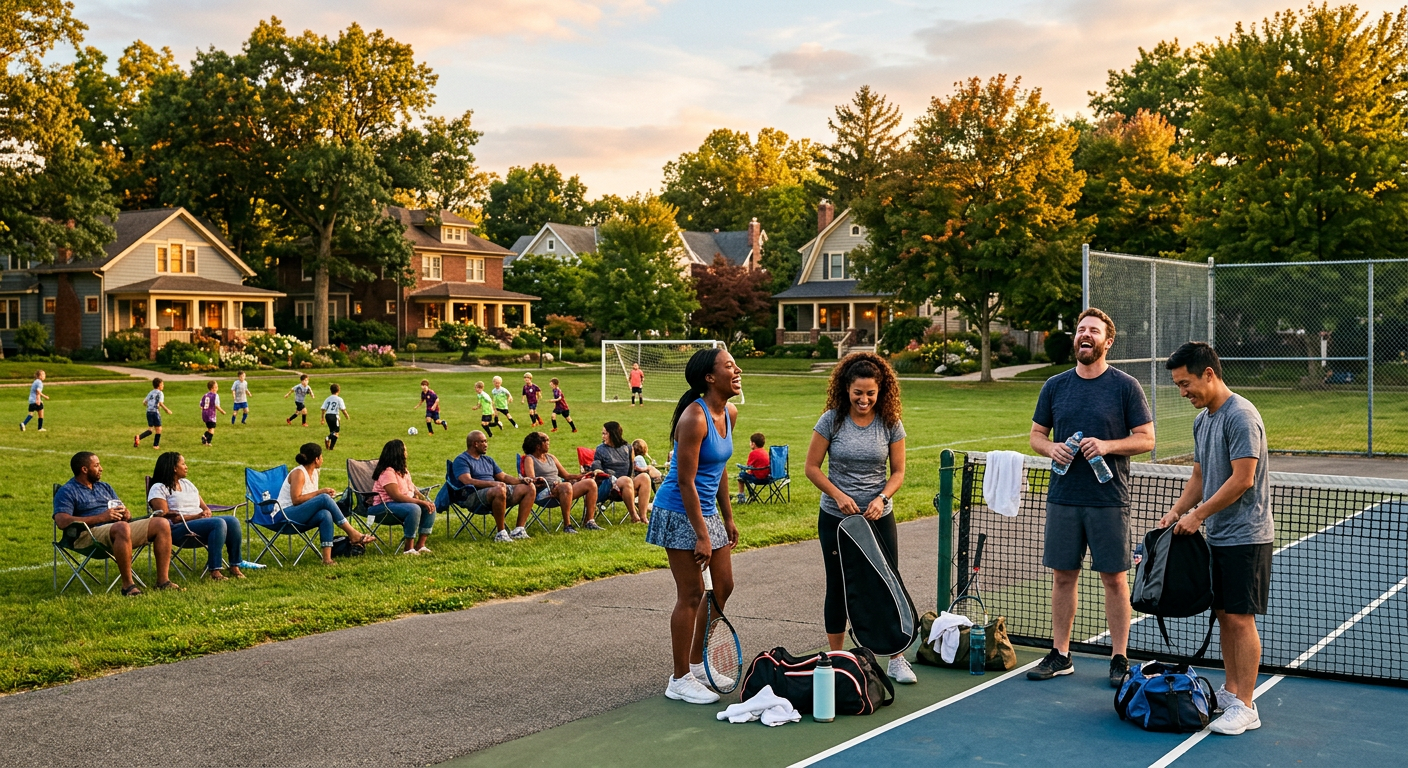
When we talk about parks in a real estate context, we often treat them as passive scenery. We imagine ourselves looking at the trees from a balcony or perhaps walking a dog along a paved path. But the active recreation culture of a neighborhood offers something far more profound: a ready-made social fabric. A public tennis court is rarely just a place to practice a backhand: it is a social square where the local architect might find herself paired with a retired teacher. The shared frustration of a missed serve or the collective triumph of a well-placed lob creates a bond that transcends the transactional nature of modern life. In these spaces, neighbors become more than just people who live on the same block: they become teammates and friendly rivals.
Consider the difference between a quiet stretch of green and a park that hosts a bustling community center. The latter acts as the neighborhood’s nervous system. It is where the evening pottery class introduces the newcomer to the long-time resident, and where the adult kickball league turns a Tuesday night into a festive occasion. These organized activities provide the social scaffolding that makes a new house feel like a home. When you buy into a neighborhood with a vibrant recreation program, you are not just purchasing a dwelling: you are gaining access to a calendar of belonging. You are buying into a system that encourages you to step out of your private sphere and into a collective one.
The quality of these spaces often dictates the rhythm of the surrounding streets. A neighborhood anchored by a well-used recreation center usually boasts a different kind of street life. You will see it in the local coffee shop, where the pre-game rush of parents in team colors creates a shared sense of purpose. You will feel it at the corner pub, where the softball team gathers after a sunset game to dissect their performance over cold drinks. This ecosystem of activity ripples outward, supporting local businesses and ensuring that the sidewalks remain populated and vibrant. A park that is used for recreation is a park that is loved, and a park that is loved is a powerful stabilizer for local property values.
For families, the local recreation offerings serve as a secondary education system. The quality of the coaching, the maintenance of the playgrounds, and the variety of the summer camps reflect the community’s investment in its future. It is worth investigating whether the local pool offers early morning lap swimming or if the community center hosts bridge tournaments for seniors. These details reveal the demographic heart of the area. They tell you if the neighborhood is a place where you can age in place, where your children can find independence, and where your weekends will be filled with more than just errands.
When scouting for a new home, the advice is usually to walk the neighborhood at different times of day. To truly understand the recreation factor, one must look for the rituals. Is there a group that meets for tai chi under the oaks at dawn? Does the basketball court stay lit until nine, filled with the rhythmic thud of a ball and the chatter of teenagers? These are the signs of a healthy, functioning community. Living well is not a solitary pursuit: it is a collaborative one. By choosing a home near a park with a rich recreational life, you are ensuring that your life will be populated by more than just four walls. You are choosing a life that is active, connected, and deeply rooted in the place you call home.