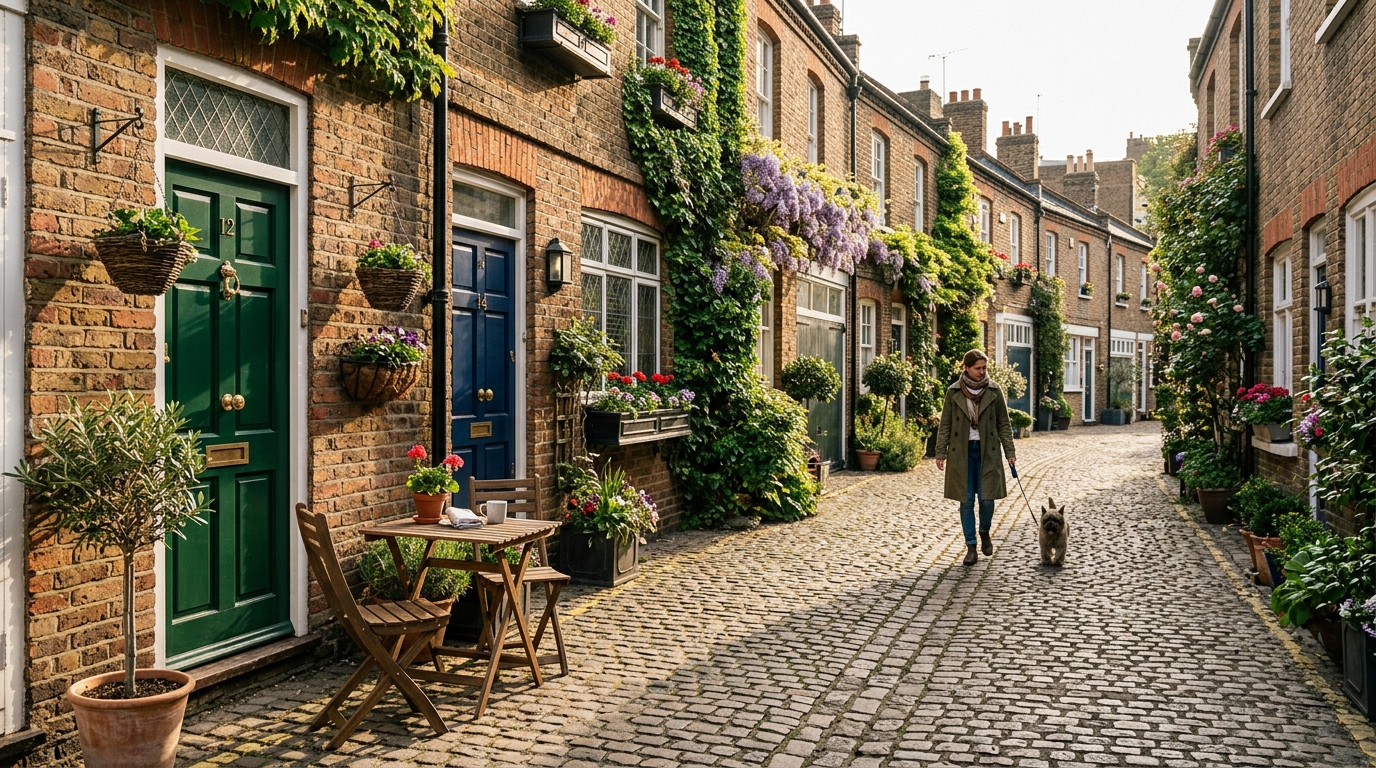
There is a specific kind of silence that exists only behind a row of grand townhouses, tucked away in the narrow passages once reserved for horses and carriages. To turn the corner from a bustling city avenue into a cobblestone mews is to experience a sudden, physical drop in blood pressure. The roar of the city fades into a hum, replaced by the sound of a neighbor watering window boxes or the distant clink of a spoon against a ceramic coffee cup. This is not just a change in geography: it is a change in the very social contract of living. In these hidden pockets of the city, the street is not a thoroughfare for strangers but a shared living room for friends.
Living in a mews house requires a certain appreciation for the miniature and the intimate. These homes, often built with weathered brick and adorned with climbing ivy, offer a scale that feels human in an increasingly vertical world. Because there is no through traffic, the residents claim the cobblestones as their own. On a warm Tuesday evening, you might find a small bistro table set out in front of a painted door, or a collection of potted lemon trees marking a boundary that everyone respects but no one officially drew. The architecture dictates the community: when you live this close to your neighbors, life becomes a series of pleasant, low-stakes interactions that build a profound sense of security.
The character of these streets is defined by the people who seek them out. They are often those who want the energy of the city within a five minute walk, but the peace of a village when they turn their key in the lock. The morning ritual here is anchored by the local bakery just around the corner, a place where the staff knows which neighbors prefer a sourdough loaf and which ones come in for the almond croissants every Saturday. This proximity to local commerce is vital. It means your life is lived on foot, punctuated by greetings with the florist and the dry cleaner, creating a web of familiarity that makes a large city feel manageable and kind.
For families, the mews offers a rare urban luxury: a safe place for a child to learn to ride a bike without the looming anxiety of heavy traffic. The local schools often reflect this same sense of community, with parents gathering at the end of the mews to walk their children to the nearby elementary school. These institutions are frequently the heart of the neighborhood, hosting autumn fairs and spring concerts that bring together families from different blocks, reinforcing the idea that the neighborhood is an extension of the home. The quality of life here is measured not in square footage but in the ease of the daily commute and the strength of the local social fabric.
On Sundays, the rhythm shifts toward the local farmers market, a vibrant gathering place just a few blocks away. Here, the mews residents mingle with the wider community, browsing stalls of heirloom tomatoes and artisanal cheeses. It is a place to catch up on local news, to discuss the upcoming street planting day, or to simply enjoy the sun. The walkability of the area is not just a convenience: it is a lifestyle choice that prioritizes health, environmental consciousness, and spontaneous connection. When everything you need is within a fifteen minute walk, the city becomes a series of interconnected villages rather than a daunting maze.
Inside the homes themselves, the history of the structures provides a unique canvas for modern life. Large wooden doors that once swung open for carriages now reveal bright, open kitchens and cozy dens. The light in a mews is different, filtered through the narrow gaps between buildings, creating a soft, painterly glow that changes throughout the day. To own a home here is to be a steward of a small piece of urban history while enjoying a way of life that feels remarkably contemporary and connected. It is a choice for the buyer who values the texture of the sidewalk as much as the finish of the countertops, and who understands that the best part of a home is often the world that waits just outside the front door.
Ultimately, the appeal of the mews is the appeal of being seen and known. In a world that can often feel anonymous, these hidden streets offer a return to a more communal way of being. It is a place where you are not just a resident on a deed, but a vital part of a living, breathing ecosystem. Whether it is the shared care of the communal planters or the simple comfort of knowing your neighbor's dog by name, the mews provides a sanctuary that is rooted in place and rich in human connection.