The Data First
The numbers on this are pretty well-established. Properties within a quarter mile of a well-maintained urban park trade at a premium — estimates range from 5% to 20% depending on the market, the park, and the type of housing. The effect is measurable and consistent across cities.
But the premium isn't uniform. Not all parks are equal. And understanding the difference tells you something important about what you're actually buying.
Active Parks vs. Passive Parks
There's a meaningful distinction between parks optimized for active use — sports fields, playgrounds, running paths, community events — and passive parks oriented around contemplation, walking, and green space. Both have value; they attract different buyers.
Families with school-age children often assign significant value to playgrounds and ball fields within walking distance. The premium for a house next to a park with a good playground, in a neighborhood of families with children, is real and substantial. You're buying access to the social infrastructure of childhood: the place where your kids will spend their unstructured afternoons.
For buyers without children, the appeal often shifts toward parks that support walking and mental restoration — tree cover, water features, off-leash dog areas. These buyers still pay the premium, but for different reasons.
Park Quality Is Not Fixed
This is worth understanding for buyers in transitional neighborhoods: parks can change dramatically. A neglected park in an underinvested neighborhood that gains community attention — new programming, a conservancy, organized maintenance — can appreciate alongside housing, sometimes faster.
Conversely, a well-maintained park in a neighborhood that's losing population and funding can deteriorate. The park is only as good as the investment behind it.
Check the city's parks capital plan. Look at whether there's an active community group or conservancy. These are leading indicators of park trajectory.
The Dog Walk as Community Builder
I've become convinced that off-leash dog areas are among the most underrated community infrastructure elements in urban neighborhoods. Dog owners know this intuitively: the dog run is where you meet your neighbors. Not just the ones with dogs, but their guests, their kids, their partners. It's a place where conversation happens organically.
A neighborhood with a well-run, active dog run has a social cohesion that's hard to manufacture otherwise. For buyers who have dogs — or who value the kind of community that emerges when people have a reason to gather regularly — proximity to a good off-leash area should be on the checklist.
The View Question
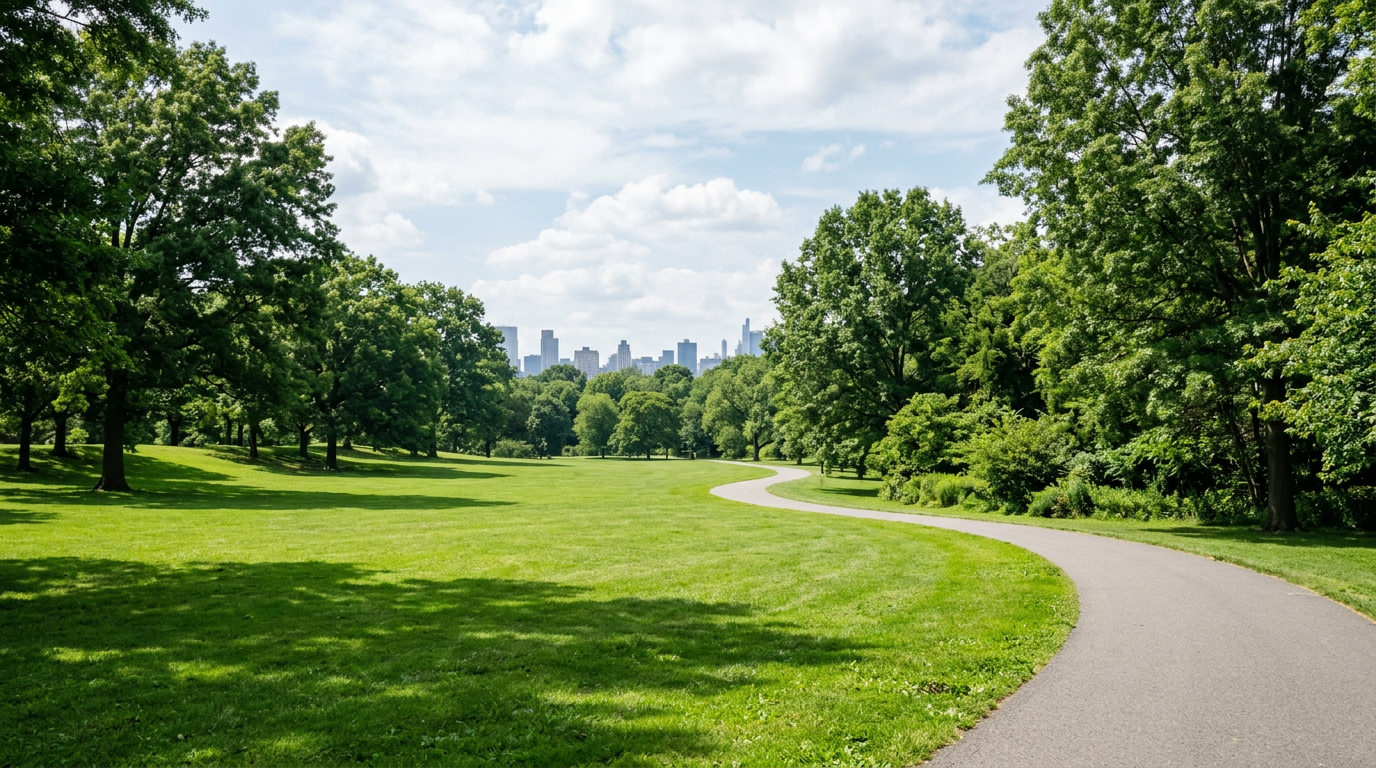
For buyers who can afford to be selective: parks with elevation — hilltop parks, parks with long sight lines — offer something that flat neighborhood parks don't, which is a sense of visual escape from the density of the city. This is psychologically valuable in ways that are hard to put a number on but easy to feel on the first visit.
When you're looking at a home, don't just check the Zillow box for park proximity. Ask: what is this park actually like? Go there on a Saturday morning. See who's there, what they're doing, whether the space feels maintained and alive.