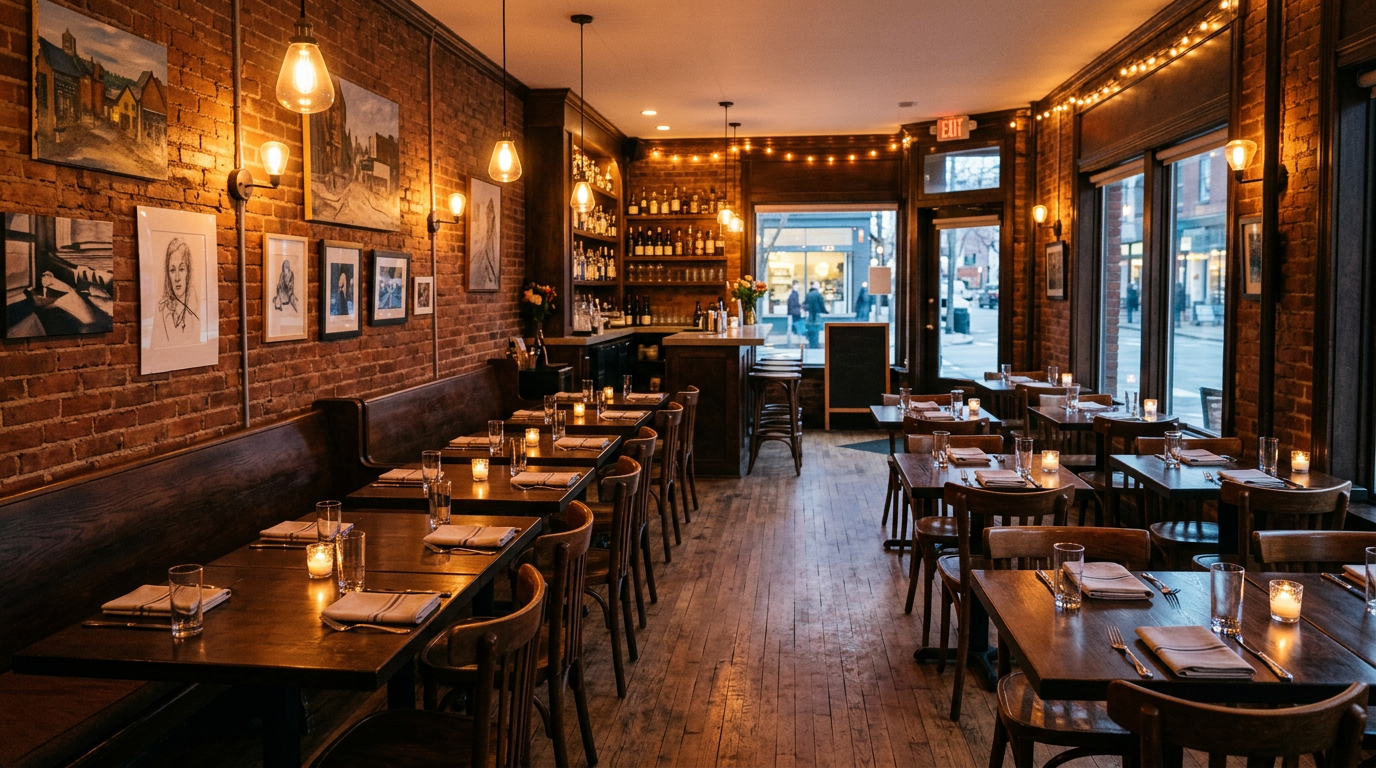
Not Just Dinner
There's a restaurant in a neighborhood I know well — been there for 22 years, the same couple running it — and if you ask longtime residents what made the neighborhood what it is, they'll say the restaurant before they say anything else. Not the school, not the park, not the architecture. The restaurant.
This is not unusual. In neighborhood after neighborhood, there's one establishment that functions as more than a business. It's a living room, a bulletin board, a place where people who otherwise might just nod at each other on the sidewalk actually stop and talk. It's where you celebrate and where you recover. It's the connective tissue.
For buyers trying to understand a neighborhood's character, looking for this place — or its absence — is one of the most useful exercises I know.
What an Anchor Looks Like
The anchor restaurant isn't always the best-reviewed or the most photogenic. It's often not a place that would survive Yelp without its loyal local base. It might have slightly uneven service on busy nights, a menu that hasn't changed much in a decade, decor that's earned rather than designed.
What it has: regulars. The couple that's been coming every Friday for eight years. The group of guys who play chess by the window on Tuesday afternoons. The staff who know what you're going to order before you open the menu.
This kind of place takes time to build. You cannot manufacture it. When you find it, you're finding evidence that a neighborhood has been inhabited by people who chose to put down roots.
When the Anchor Closes
It's also instructive to ask about places that recently closed. A neighborhood in transition — gentrifying quickly, or losing population — often shows it first in its restaurants. The place that's been there forever closes because the lease tripled. The new spots that open are louder, more expensive, optimized for Instagram rather than for the people who live there.
Neither wave is inherently good or bad. But understanding which wave you're riding — arriving after the anchor or before it — shapes what you're buying into.
The Open Table Question
When I'm evaluating a neighborhood for someone, I ask them to do one thing: try to get a reservation at the neighborhood's best-regarded restaurant on a Friday night three weeks out. If there's a two-hour wait at 7pm, you're looking at a place with real demand. If you can walk in any night, that tells you something too.
The restaurant's health is the neighborhood's health, reflected back in real time.